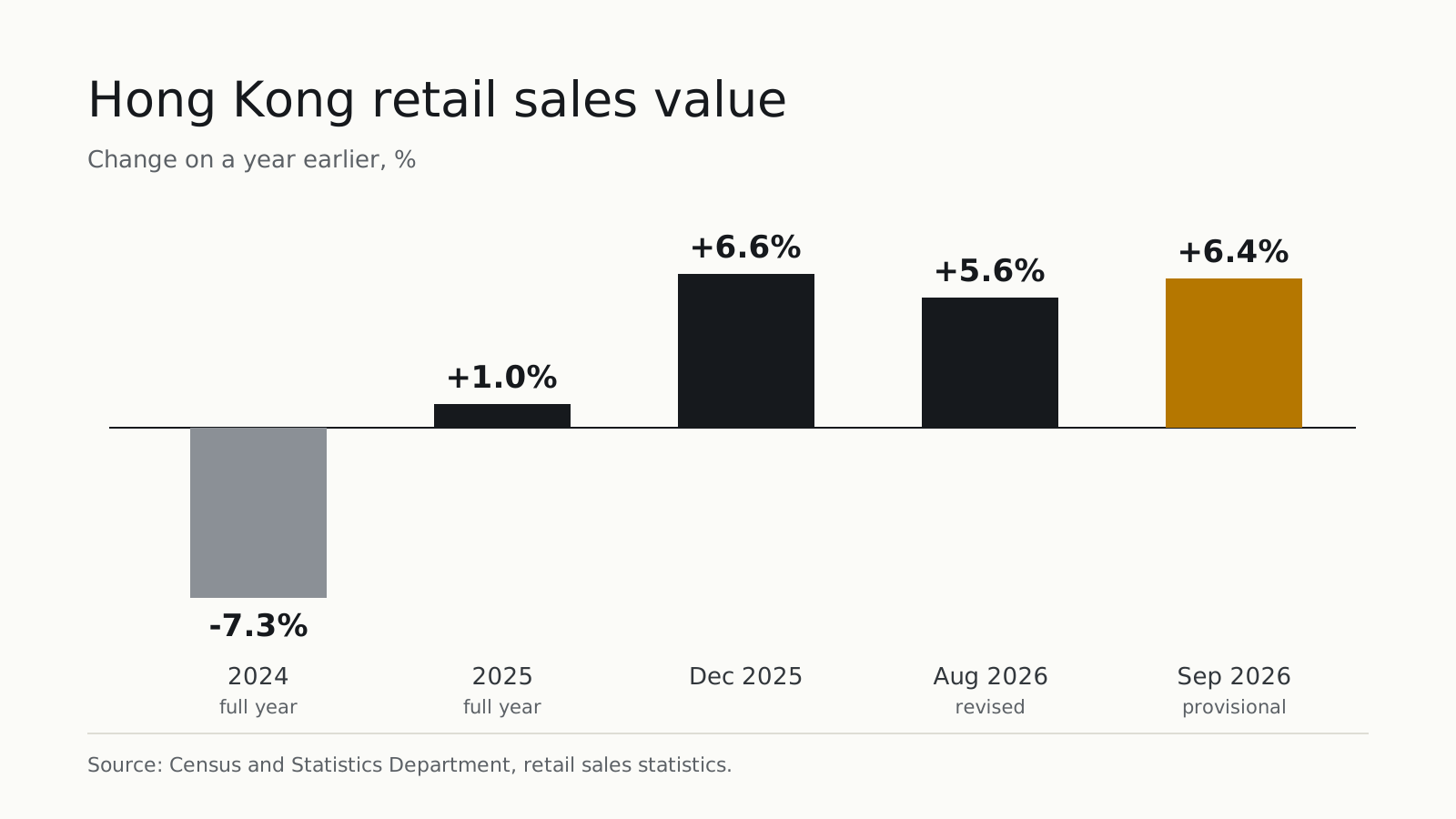
Hong Kong’s total retail sales value fell 7.3% in 2024, rose 1.0% to HK$380.5 billion in 2025, and grew 6.4% to HK$33.4 billion in September 2026, the seventeenth consecutive month of growth. Food, alcoholic drinks and tobacco rose 5.3% that month, but supermarket sales fell 1.0%, and online sales reached 13.1% of the total.
From a fall to a rebound
The Census and Statistics Department (C&SD) surveys retail sales every month. Its figures show three distinct phases since 2024.
| Period | Retail sales value | Change on a year earlier |
|---|---|---|
| 2024, full year | — | −7.3% |
| 2025, full year | HK$380.5 billion | +1.0% (volume about flat) |
| December 2025 | About HK$35 billion | +6.6% |
| August 2026 (revised) | — | +5.6% |
| September 2026 (provisional) | HK$33.4 billion | +6.4% |
The September 2026 rise was the seventeenth in a row. After removing price effects, sales volume rose 3.9%, so most of the latest growth reflects more goods sold, not only higher prices. The Government linked the month to more visitor arrivals and festive purchases ahead of the Mid-Autumn Festival.
Not every shop shares the recovery
The headline figure hides wide differences between types of outlet.
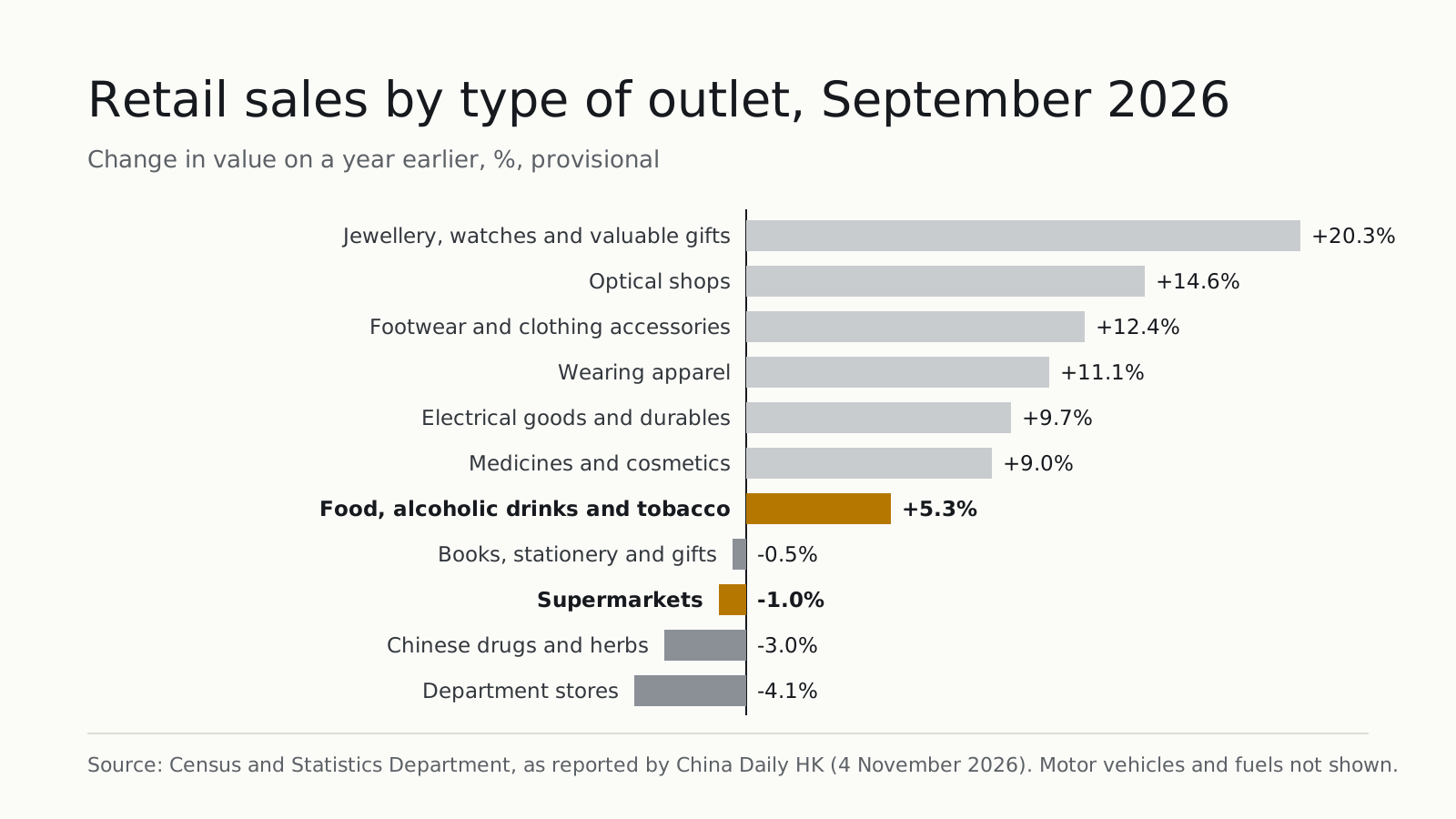
Categories that visitors buy, such as jewellery (+20.3%), optical goods (+14.6%) and clothing (+11.1%), grew fastest. Supermarkets, which depend mostly on residents’ weekly shopping, fell 1.0%. For a packaged food brand, that split matters more than the total: the recovery is strongest where visitors spend, and weakest in the channel residents use most.
Food sales turned later
The C&SD category “food, alcoholic drinks and tobacco” covers specialist food shops rather than supermarkets. It turned positive months after total retail.
| Month (2026) | Food, alcoholic drinks and tobacco |
|---|---|
| March | −0.4% |
| April | −1.0% |
| June | +2.0% |
| September | +5.3% |
The September rise coincided with the Mid-Autumn Festival, so part of it is seasonal. The trend since the spring is nonetheless clearly upward.
Online is now one sale in eight
Online retail sales reached HK$4.4 billion in September 2026, 13.1% of the total, up 12% on a year earlier. Online sales are spread across all categories, but the share is now large enough that a food brand’s product information, photographs and Chinese and English product names need to work on screen as well as on the shelf.
Value and volume
In 2025, sales value rose 1% while volume was about flat. Growth that comes only from prices does not mean more packs leave the shelf. In September 2026 volume rose 3.9%, which suggests real demand is returning. When you read a retail release, check both figures.
What this means for food brands
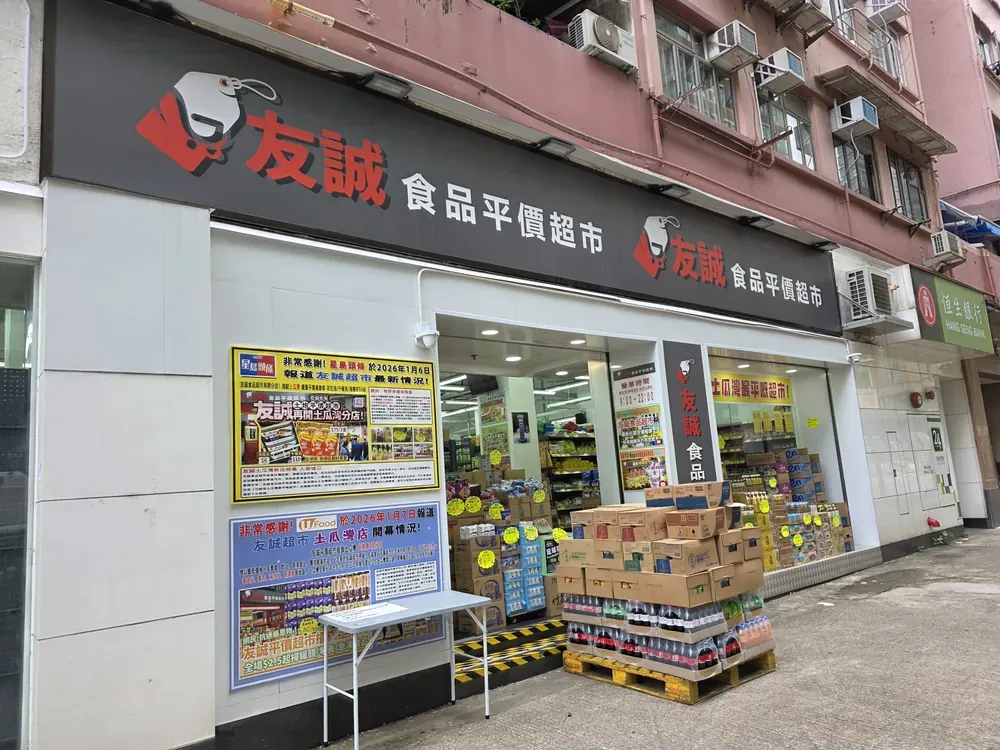
- Look beyond supermarkets. With supermarket sales still slightly down, food supermarkets, snack specialists and online platforms offer more momentum.
- Plan around festivals. Food retail peaks around the Mid-Autumn Festival and Lunar New Year. Stock needs to be in Hong Kong several weeks before.
- Follow the visitors. Visitor-led categories are growing fastest. Snacks and gift packs sold in districts with many visitors benefit first.
- Read volume, not just value. Price-led growth can hide flat demand.
For how the rebound links to travel across the border, see our article on cross-border spending and Hong Kong grocery.
Frequently asked questions
Who publishes Hong Kong retail sales figures, and when?
The Census and Statistics Department publishes provisional monthly figures about five weeks after the month ends, broken down by type of outlet. Figures are revised the following month.
What is the difference between retail sales value and volume?
Value is sales in Hong Kong dollars. Volume removes the effect of price changes. In 2025, value rose 1% while volume was flat, so the growth came from prices rather than more goods sold.
Are Hong Kong supermarket sales growing?
Not in the latest month. Supermarket sales value fell 1.0% in September 2026 on a year earlier, while total retail rose 6.4% and food, alcoholic drinks and tobacco rose 5.3%.
Sources
- Provisional statistics of retail sales for December 2025 · Hong Kong Government · 3 February 2026
- December retail sales up 6.6%; 2025 retail sales value · news.gov.hk · 3 February 2026
- Retail sales for September 2026 · China Daily Hong Kong · 4 November 2026
- Retail sales rise 6.4% in September as restaurants record modest quarterly gains · Dimsum Daily · 3 November 2026
- Hong Kong retail sales, monthly category changes · Trading Economics
- Report on Monthly Survey of Retail Sales · Census and Statistics Department