

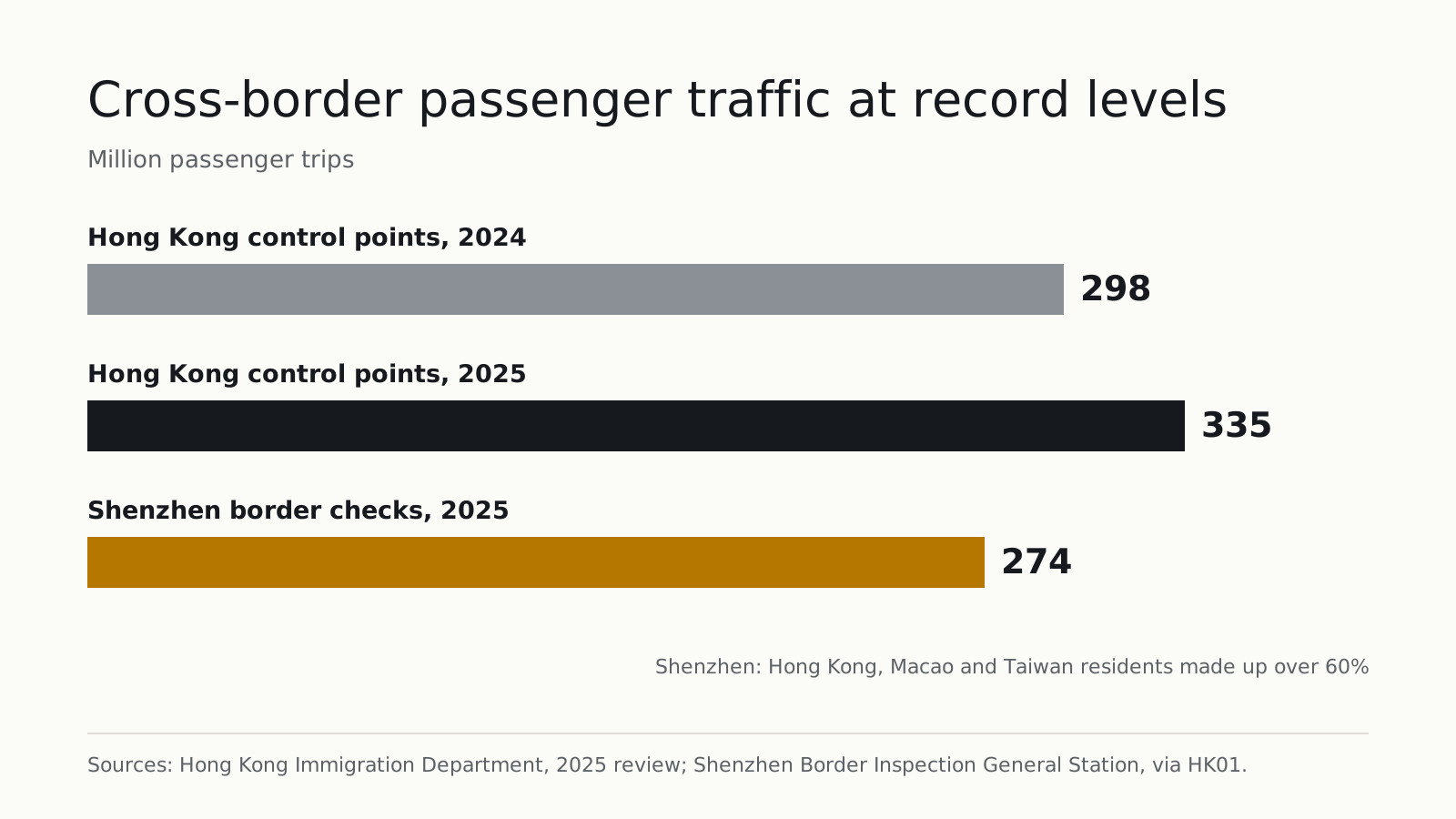
Cross-border travel between Hong Kong and Shenzhen reached record levels in 2025: about 335 million passenger trips through Hong Kong’s control points, up 12%. Part of residents’ grocery spending has moved north with them. In September 2026, Hong Kong supermarket sales fell 1.0% while total retail rose 6.4%. Food brands can respond with daily availability, compliant labels and formats suited to Hong Kong shops.
Traffic in both directions
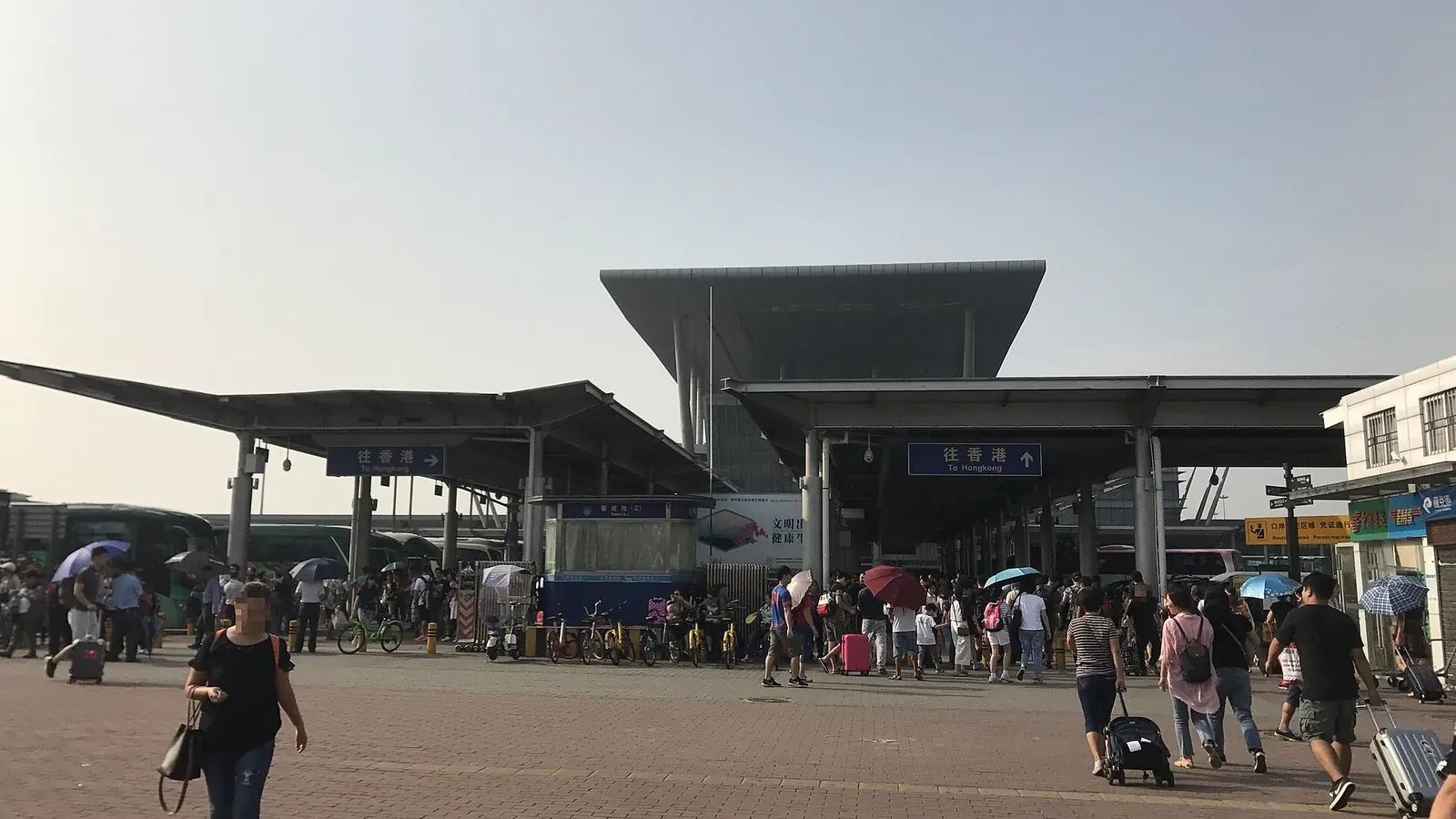
Travel across the boundary runs both ways. Mainland visitors come south to shop and sightsee; Hong Kong residents go north to eat, shop and spend weekends.
| Measure | 2025 | Change |
|---|---|---|
| Arrivals and departures, all Hong Kong control points | About 335 million | +12%, a record |
| Visitor arrivals to Hong Kong | About 49.9 million | +12% |
| of which from the Mainland | About 37.8 million | 76% of visitors |
| Crossings checked by Shenzhen border inspection | 274 million | +14%; over 60% were Hong Kong, Macao and Taiwan residents |
What the shop data show
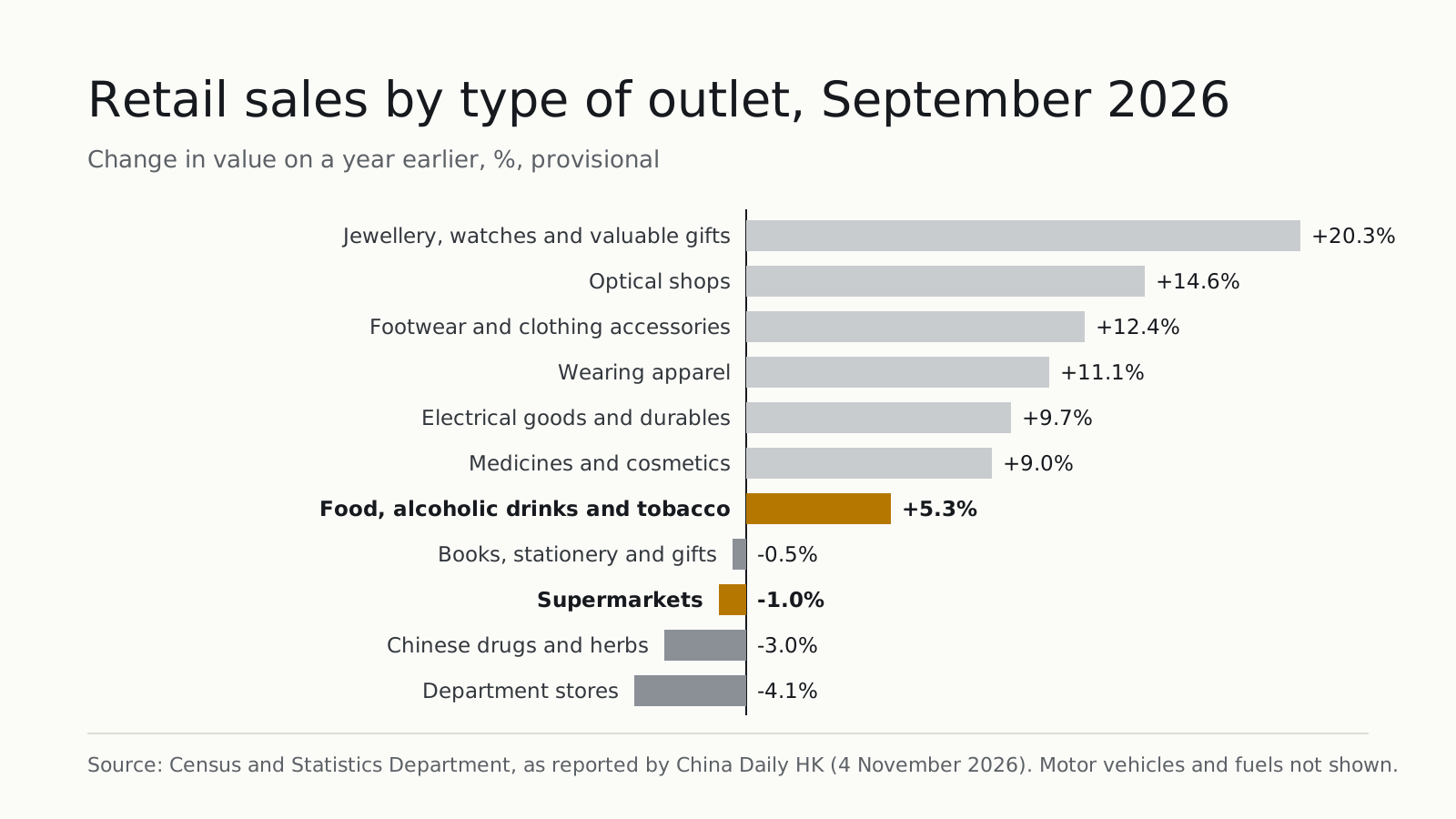
Retail data for September 2026 show the effect clearly. Categories that visitors buy grew fast: jewellery and watches rose 20.3%, clothing 11.1%. Supermarkets, which rely on residents, fell 1.0%. Specialist food retail did better, at +5.3%, helped by Mid-Autumn Festival purchases.
Which products travel
NielsenIQ’s analysis of Hong Kong household purchases to June 2026 finds that snacks and confectionery lead FMCG spending bought outside Hong Kong, and that the category is growing both in Hong Kong and abroad. Fresh food and beverages grow at home but are weaker in purchases made outside the city. In other words, snacks are the category residents are most willing to carry home, and also one they keep buying locally.
What food brands can do
The trip north is a weekend activity. Hong Kong shops serve the rest of the week. That gives brands several practical levers:
- Be on the shelf residents pass daily. Food supermarkets and snack specialists in residential districts compete on convenience, not on a single price comparison.
- Use pack formats that suit the city. Single-serve and small multi-packs fit small homes and impulse purchases.
- Make the label work for Hong Kong. A product with a compliant Hong Kong label, with the 1+7 nutrition table and a best-before date, is one a local retailer can list without risk. See our labelling guide.
- Follow visitor flows. Snacks and gift packs sell where visitors shop. Snack chains with branches in busy districts reach both residents and visitors.
- Time stock for festivals. Mid-Autumn and Lunar New Year lift food sales; stock must arrive weeks earlier.
Reading the data with care
Total crossings mix residents, visitors and workers, and the Hong Kong and Shenzhen counts are measured differently, so they should not be added together. The full-year number of Hong Kong residents travelling north in 2025 is not published in the sources above, which is why this article uses total crossings and visitor arrivals instead.
For the broader retail trend, see Hong Kong retail sales 2024–2026.
Frequently asked questions
Does northbound shopping reduce demand for packaged food in Hong Kong?
It shifts part of it. Supermarket sales fell 1.0% in September 2026 while total retail rose 6.4%. NielsenIQ also finds that snacks and confectionery bought outside Hong Kong are growing, alongside purchases at home.
How can a food brand compete with prices across the border?
By offering what a trip north cannot: availability every day, Hong Kong-compliant labels, pack sizes suited to small homes and impulse buying, and presence in the shops residents pass daily.
Sources
- Immigration Department Review 2025 · Hong Kong Government · 13 February 2026
- Passenger traffic hits record high · news.gov.hk · 13 February 2026
- Hong Kong visitor arrivals climbed 12% to 49.9 million in 2025 · The Standard
- 深圳邊檢去年錄2.74億人次出入境 同比升14% · HK01
- Cross-border and overseas purchases are reshaping Hong Kong FMCG spending · NielsenIQ
- Retail sales for September 2026 · China Daily Hong Kong · 4 November 2026