
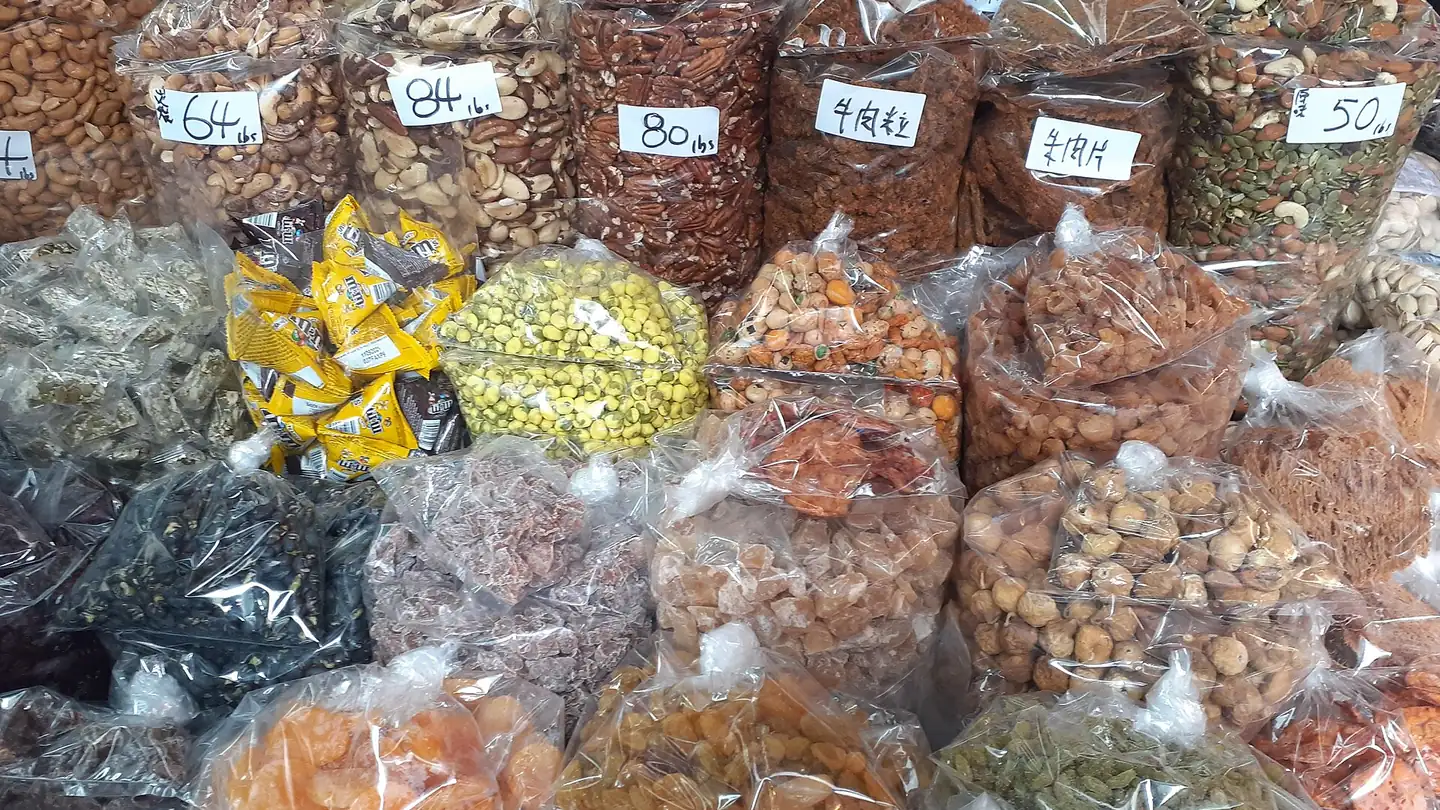

Mainland Chinese snack brands are gaining shelf space in Hong Kong because shoppers already know them, the category is growing, and the brands have built strong products at home. NielsenIQ finds snacks and confectionery lead Hong Kong FMCG spending bought outside the city, and Weilong, one of the best-known examples, grew its konjac and kelp snack sales 33.7% in 2025. To sell in Hong Kong, each product needs a compliant local label.
A category Hong Kong shoppers already buy
NielsenIQ’s study of Hong Kong household purchases in the year to June 2026 finds that snacks and confectionery lead the FMCG spending that Hong Kong residents make outside the city, mainly on trips north and abroad. The same study finds the category also grows in Hong Kong itself. Snacks are therefore not a category people stop buying at home because they buy it elsewhere: the habit is reinforced on both sides of the border.
Specialist food retail is also recovering. In September 2026, sales at food, alcoholic drink and tobacco outlets rose 5.3% on a year earlier, against a 1.0% fall at supermarkets.
What a strong home category looks like: Weilong
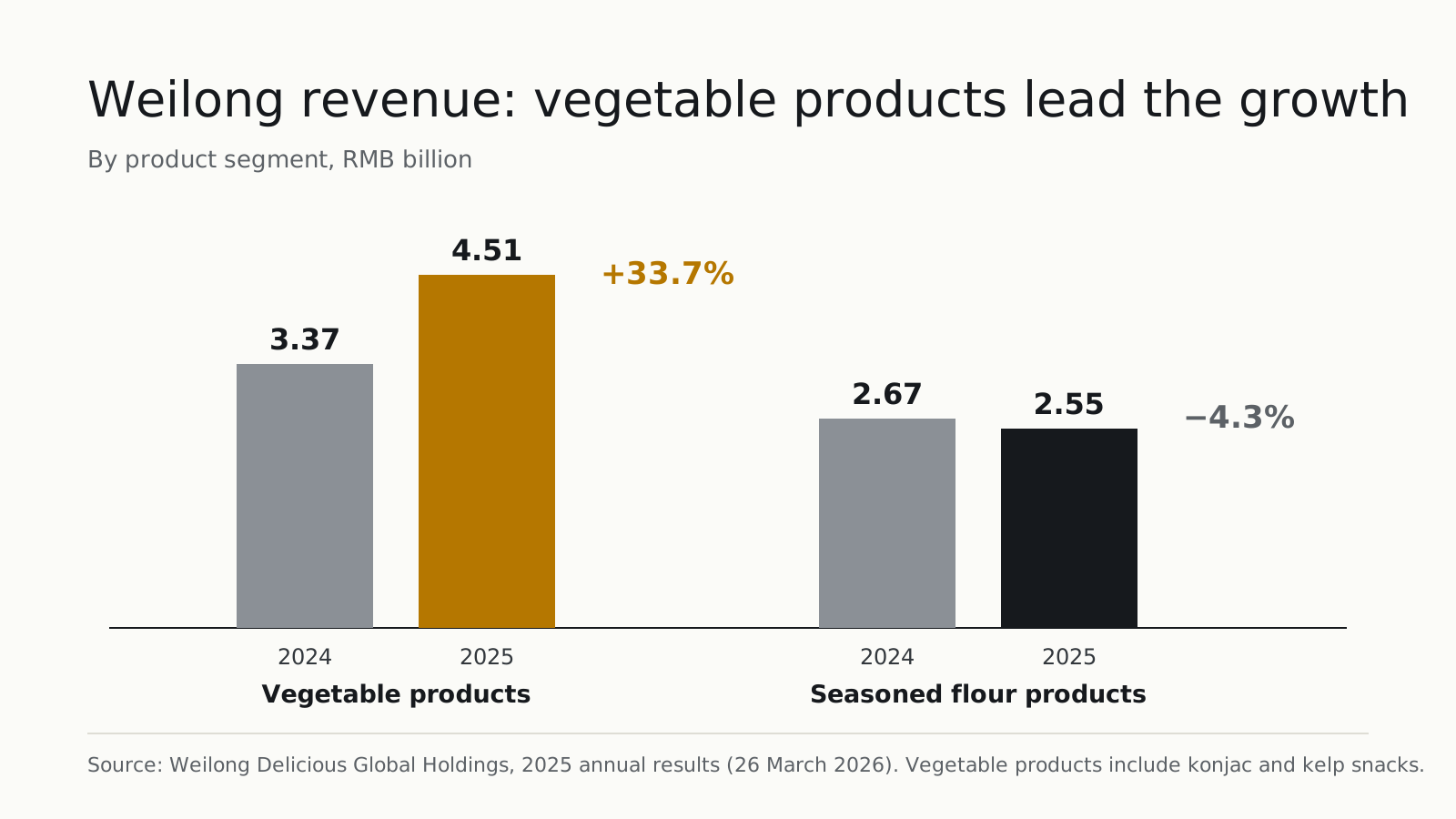
Weilong Delicious Global Holdings, listed on the Hong Kong Stock Exchange, is known for spicy gluten strips (辣條) and, increasingly, for konjac snacks such as Mo Yu Shuang (魔芋爽). Its 2025 results show where demand is moving.
| Weilong, 2025 | Figure |
|---|---|
| Revenue | RMB 7.22 billion, +15.3% |
| Net profit | RMB 1.43 billion |
| Vegetable products (konjac, kelp) | RMB 4.51 billion, +33.7%, 62.4% of revenue (2024: 53.8%) |
| Seasoned flour products (gluten strips) | RMB 2.55 billion, −4.3% |
| Offline channels | 89.7% of revenue |
Two points matter for Hong Kong. First, the growth is in lighter, newer formats such as konjac, not only in the brand’s original product. Second, nine-tenths of sales still happen in physical shops: these are products sold on shelves, which is what a Hong Kong distributor provides.
Formats that travel well
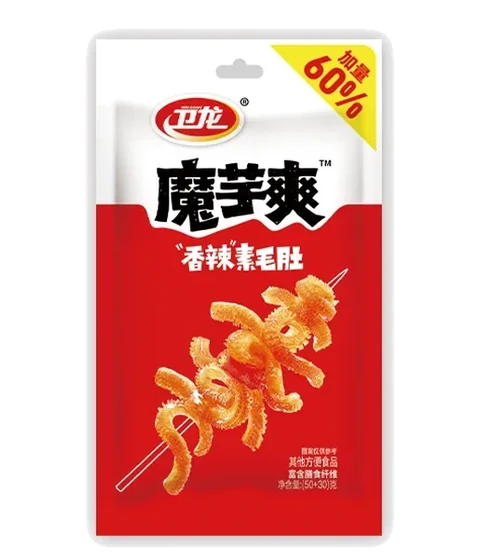
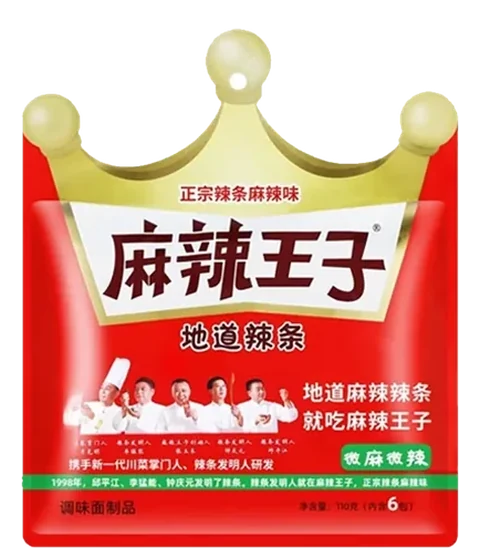
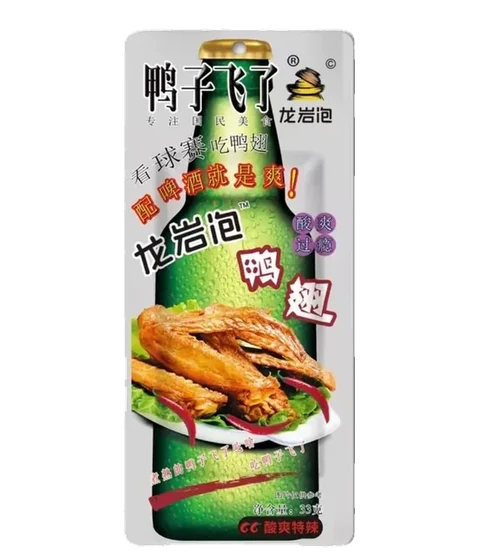
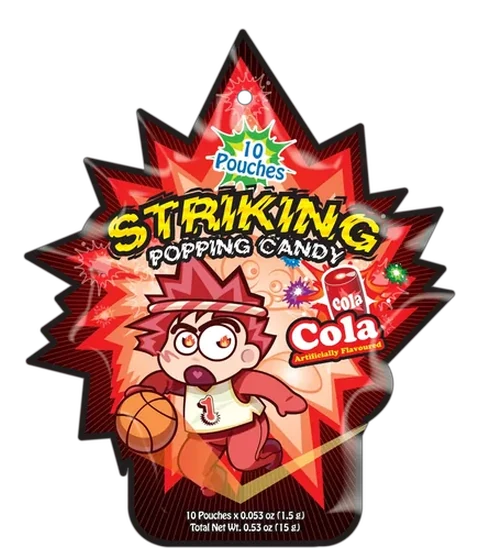
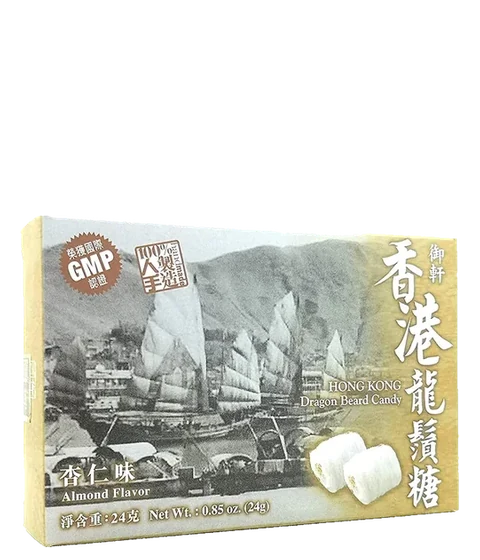
The Mainland snacks that sell well in Hong Kong tend to share a few traits:
- Recognisable packs. Shoppers who have seen the brand on the Mainland or online pick it out quickly.
- Single-serve and small multi-packs, which suit impulse buying and small homes.
- Clear flavour signals, such as spicy, numbing or pickled, that set the product apart on a crowded shelf.
- Traditional sweets with a story, such as dragon’s beard candy or sesame candy, which work as gifts as well as snacks.
Where they are sold
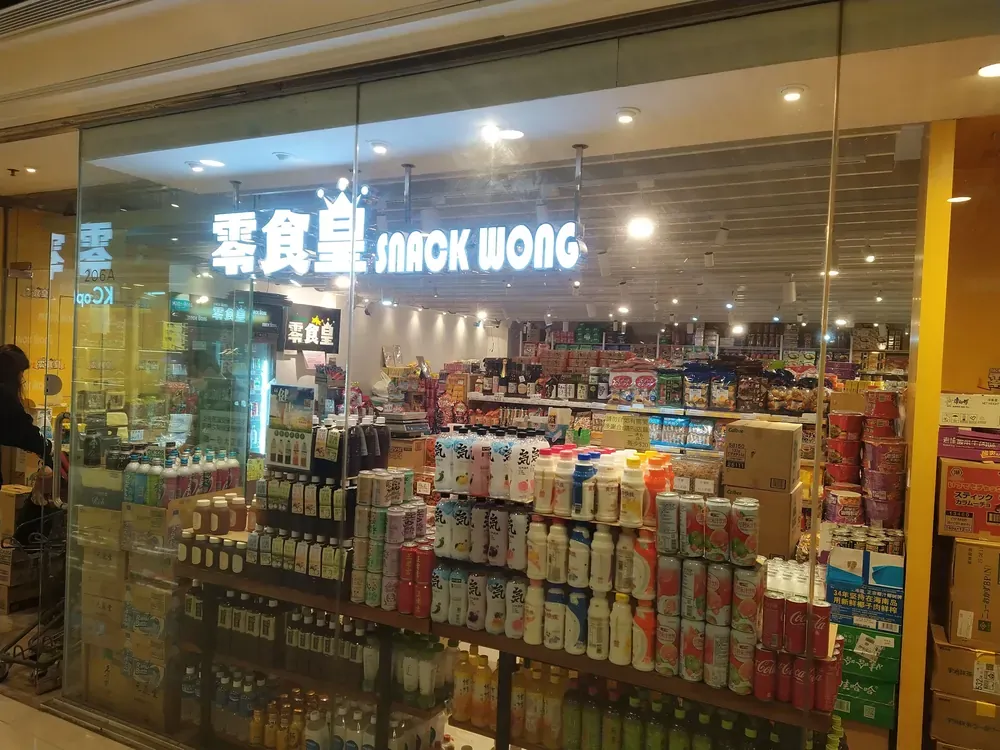
In Hong Kong, Mainland snacks sell through supermarkets, food supermarkets and a dense network of snack specialists. The specialists stock wide ranges in small shops and change their range often, which suits new brands.
Before the first Hong Kong order
- Label. Add the 1+7 nutrition table, a best-before date in the Hong Kong form and the allergen declaration. Our labelling guide covers each item.
- Format check. From 1 April 2026, konjac jelly in mini-cups of 45 mm or less is prohibited. Konjac strips are a different format, but check every konjac product.
- Shelf life. Allow for shipping, warehousing and a full selling period in Hong Kong.
- Stock in Hong Kong. Snack specialists reorder often and in small quantities; they buy from local stock.
Hong Shine distributes several of the brands shown above. Our portfolio lists them, and our page for brand owners explains how we work.
Frequently asked questions
Why are Mainland Chinese snacks popular in Hong Kong?
Many Hong Kong shoppers already know these brands from trips to the Mainland and from social media. NielsenIQ finds snacks and confectionery lead the FMCG spending Hong Kong households make outside the city, so local availability meets an existing habit.
Does the 2026 konjac jelly ban affect konjac snacks?
The ban, in force from 1 April 2026, covers konjac jelly in mini-cups with a height or width of 45 mm or less. Konjac snacks in strip form are a different format, but every konjac product should be checked against the rule.
What does a Mainland snack brand need for Hong Kong?
A label that meets Cap. 132W, with the 1+7 nutrition table, a best-before date in the Hong Kong form and declared allergens; enough shelf life for shipping and sale; and a distributor that holds stock in Hong Kong.
Sources
- Cross-border and overseas purchases are reshaping Hong Kong FMCG spending · NielsenIQ
- WL Delicious FY2025 Results: Revenue Climbs 15.3% to RMB7.22 Billion, Net Profit Surges 33.6% · Tiger Brokers News · 26 March 2026
- WL Delicious Announces 2025 Annual Results · ifeng · 26 March 2026
- Food and Drugs (Composition and Labelling) (Amendment) Regulation 2025 to take effect on April 1 next year · Centre for Food Safety · 21 August 2025
- Frequently asked questions on food labelling requirements for prepackaged food · Centre for Food Safety
- Retail sales for September 2026 · China Daily Hong Kong · 4 November 2026